There’s something raw and powerful about solo travel for me, and my recent trip to Italy even felt strikingly similar to a psychedelic journey–without the medicine. Stay with me here, I’ll explain.
I recently returned from several weeks of traveling through Italy on my own. At midlife, extended international travel isn’t always easy to coordinate with others, and my timing often revolves around when my house is rented. Because of that, these solo trips become deeply personal and, in many ways, therapeutic for my mental and physical health.
Much like preparing for a psychedelic experience, I’m intentional about the overall kind of travel experience I want, yet I know I can’t always remain in the driver’s seat. In fact, with Italy I was determined to avoid cars and use the efficient train and bus systems for all my travel so I could just gaze out the windows.
I chose smaller, less touristy towns near mountains, lakes, and the sea. I created a reliable but loose plan, booking my inns and hotels, a biking group adventure in Liguria, and time with an EU colleague. But I left ample space for spontaneity, and following what felt interesting in the moment.
In psychedelic therapy, we talk about set and setting—your internal mindset and your external environment–as a container for the experience. When both feel safe, even if you’re stepping into the unknown, there’s a mix of nervousness and calm anticipation. From there, it becomes less about control and more about surrender, allowing the experience to reveal what it’s meant to teach.
Italy became that safe container for me.
I experienced its vibrancy through all five senses: the beauty, the slower pace, the food, the language, the florals, the design, and the warmth of the people. Traveling alone stripped away the usual mirrors. No one to interpret or shape the experience with me. Without the familiar cues of home, I wasn’t defined by roles, routines, or expectations, and I was simply a person moving through the world.
Like a psychedelic journey, my solo travel became an internal process.
In my work as a psychedelic guide, we talk about quieting the “default mode network”—the patterned ways we think and behave. Early in a psychedelic experience, there’s often disorientation as those patterns begin to dissolve.
I felt my default mode on high alert when I landed in Europe, with new languages, unfamiliar streets, and different daily rhythms. Even ordering a coffee required a translation app and humility. There was no autopilot. At first, the lack of structure felt uncomfortable. But after about five days, something shifted. Without constant phone notifications, obligations, or the low-grade urgency of my American life, my mind began to quiet–slowly, like sediment settling in water.
I started noticing again.
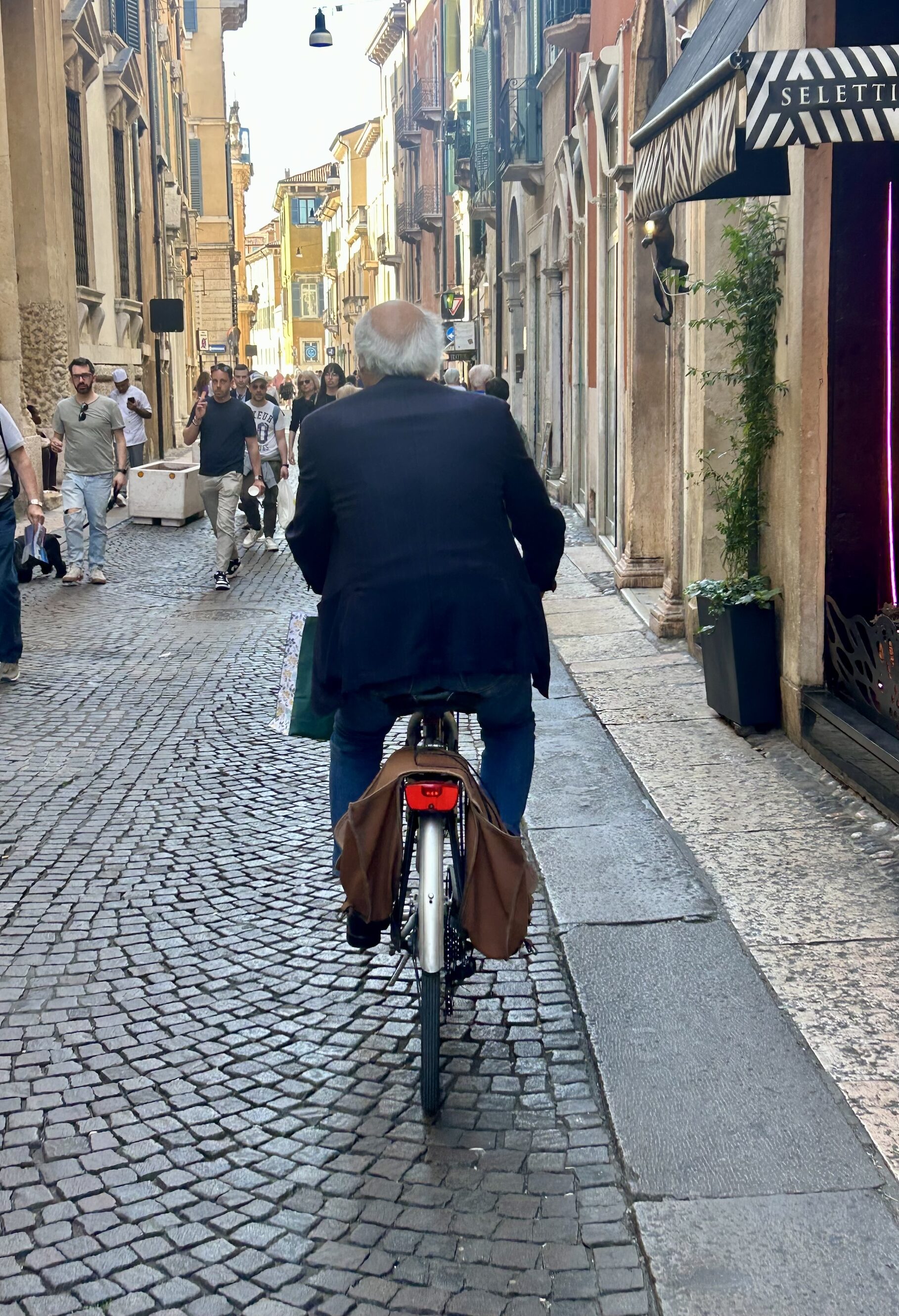
The way light hit the stone streets and green hills in late afternoon. An older Italian man cycling through a crowded piazza with ease and grace. The intoxicating fragrance of viburnums on the side of the road. The quiet ritual of a simple aperitif before dinner. These weren’t just aesthetic moments—they felt regulating and so very grounding to my taxed nervous system.
I could actually feel myself unwinding. Standing at a café for coffee instead of rushing off. Wandering the streets without a plan. Listening to conversations in a language I didn’t understand. And feeling a daily sense of pure joy rise in my heart, in one of my favorite places in the world. Even my body responded—my shoulders, usually tight, began to relax despite hauling luggage through countless train stations and stairs.
Presence replaced productivity on this trip. With that presence came space.
Space for reflection, creativity, and inner self-awareness. Space to actually feel, and not just the pleasant emotions. Loneliness surfaced a few times. So did grief. And even guilt for relaxing and taking a much-needed vacation, after a long winter of discontent.
There were several uncomfortable moments: eating dinner alone, navigating confusing train systems, getting lost trying to find my Airbnb at night in Bolzano, and having a mysterious leg rash the local pharmacist couldn’t diagnose. Not always enjoyable, but somehow meaningful. Opportunities to either rise to the occasion, or sit with what was coming up and ask why.
That’s where the parallel to a psychedelic journey really emerged.
There’s often a point in a journey where resistance softens, and discomfort transforms into insight. You end up in a kind of therapy session–with yourself. This happened to me in Italy. Loneliness would soften into divine solitude. Uncertainty became wise curiosity. Challenges became important messages I needed to hear.
Italy also reminded me what it feels like to follow my own rhythm. To be anonymous without a title or role, wake up without an agenda, and spend hours wandering without it needing to be productive time. To trust my instincts about where to go, what to eat, and when to rest. At this stage of my life I’m all about the daily Italian siesta/riposo midday break!
In Italy I felt guided by something very internal, rather than external.
I’ve come to believe that inner transformation comes from open exploration–not rigid plans, goals, or tightly packed itineraries, but the in-between moments where synchronicity can emerge. In a psychedelic journey or solo travel, when you surrender to the flow in life, doors open, lights go on, and the unexpected offers gifts to your soul.
At one point in my trip, a friend surprised me and rode his motorcycle down from Switzerland to meet me for a day, and this brought much needed grounding, connection, and reflection. It reminded me of the role of a psychedelic guide—not to direct the journey, but to support it, often appearing at just the right moment.
Home from my travels, I’m now in what we call the integration, or processing insights phase in psychedelic journeys, which is just as important as the experience itself. Something in me has definitely shifted. I didn’t just bring back memories and Limoncello. I came home with new questions:
What pace actually feels good to me now?
What does a more aligned way of living and working look like?
What do I want to create in this next chapter?
Why do we, in the U.S., value productivity so much more than pleasure, when it rarely leads to lasting fulfillment?
Solo travel doesn’t fix anything or hand you answers. But like a psychedelic journey, it offers deeper awareness, new insight, and a different lens to see yourself.
And sometimes, that’s where real healing begins—not by escaping life, but by being present enough to fully experience it.


Beautiful piece. I have been locked into the mindset of traveling with someone but you’ve inspired a trip concept that will now be a solo adventure. Thank you.